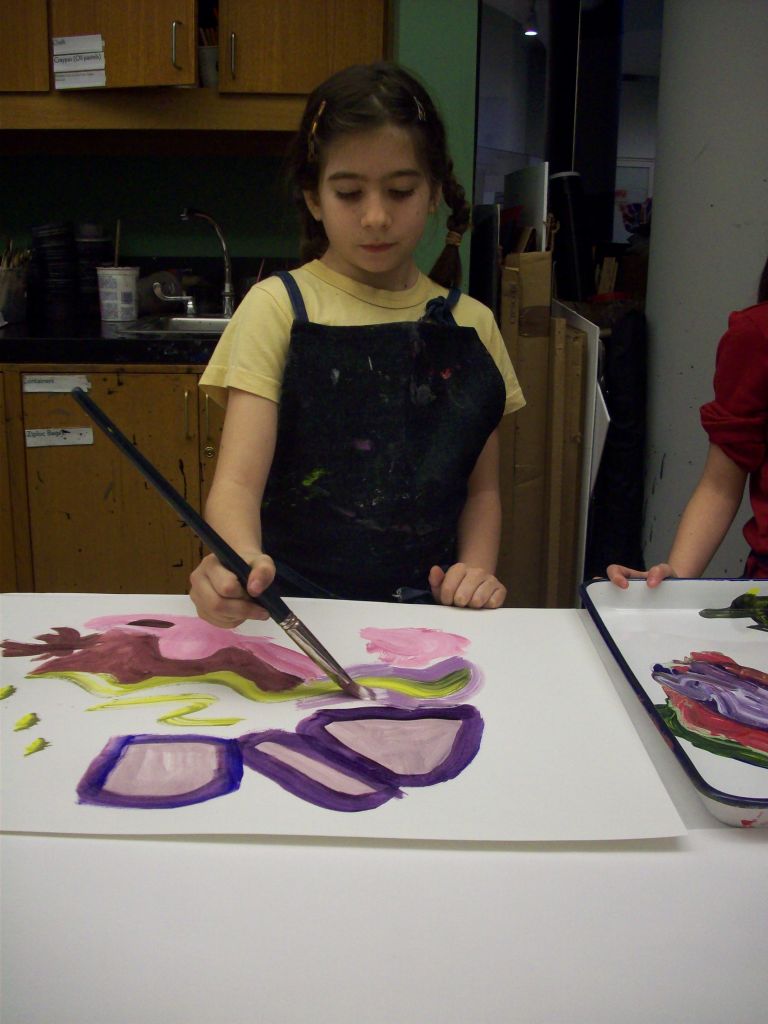
A 3rd grader explores paint with a long-handled bristle brush. She has not pre-planned her composition, but looks closely at her work to figure out what she needs to do next. 
Asked, “What’s a time you will remember years from now?” this child paints her older brother’s graduation from elementary school, paying special attention to the mortarboard and robe. 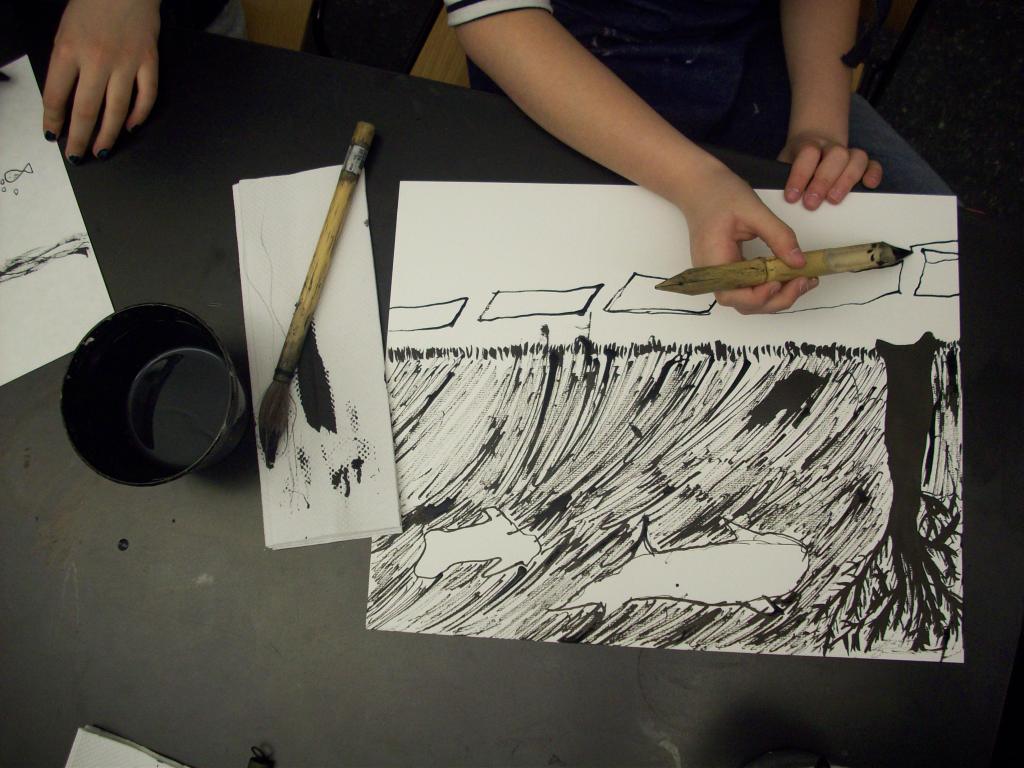
This child uses a reed pen with ink. After having looking at Van Gogh’s drawings, I had asked her, “Where do you like to go in nature?” 
Starting with one piece of pre-glued orange paper, this child has chosen to create a symphony of oranges. 
A 1st grader builds using cardboard shapes. 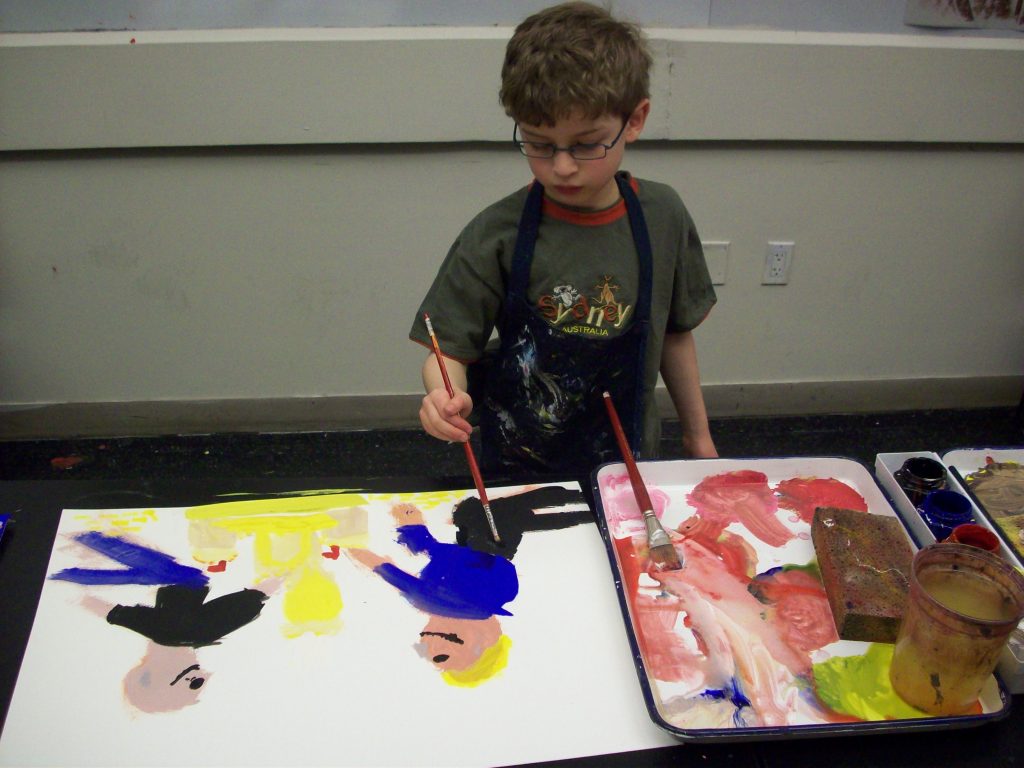
This 8-year-old shows himself playing Legos with a friend. 
This 2nd grader is showing a time she got badly hurt by banging into a brick wall. 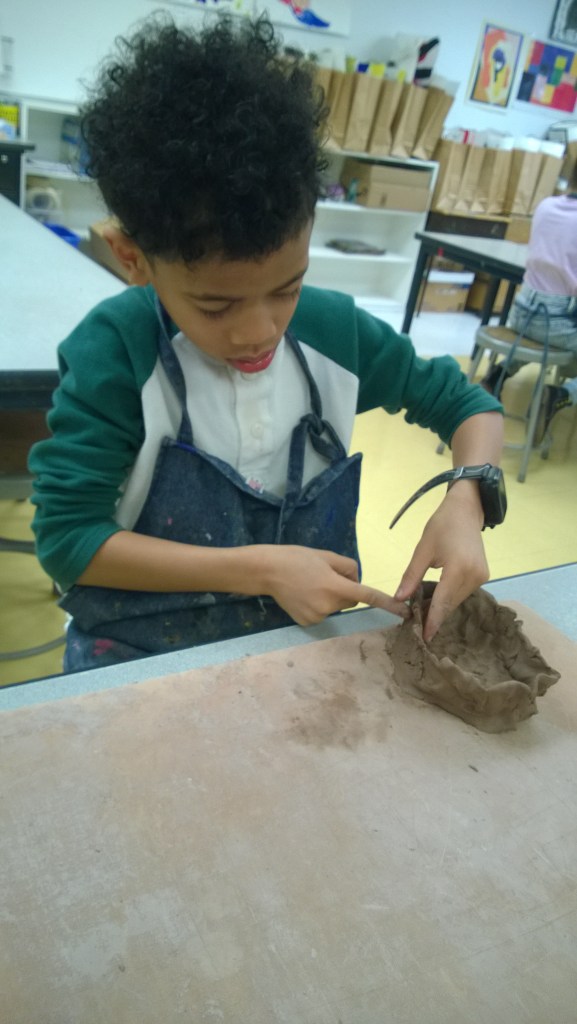
Asked, “How can you change this clay?” one 6-year-old flattens his clay and pinches up a wall to make a pot. 
This 1st grader has used clay to show herself in a cozy imaginary spot. 
Materials are presented clearly and children are taught (and then trusted) to use them according to their needs. 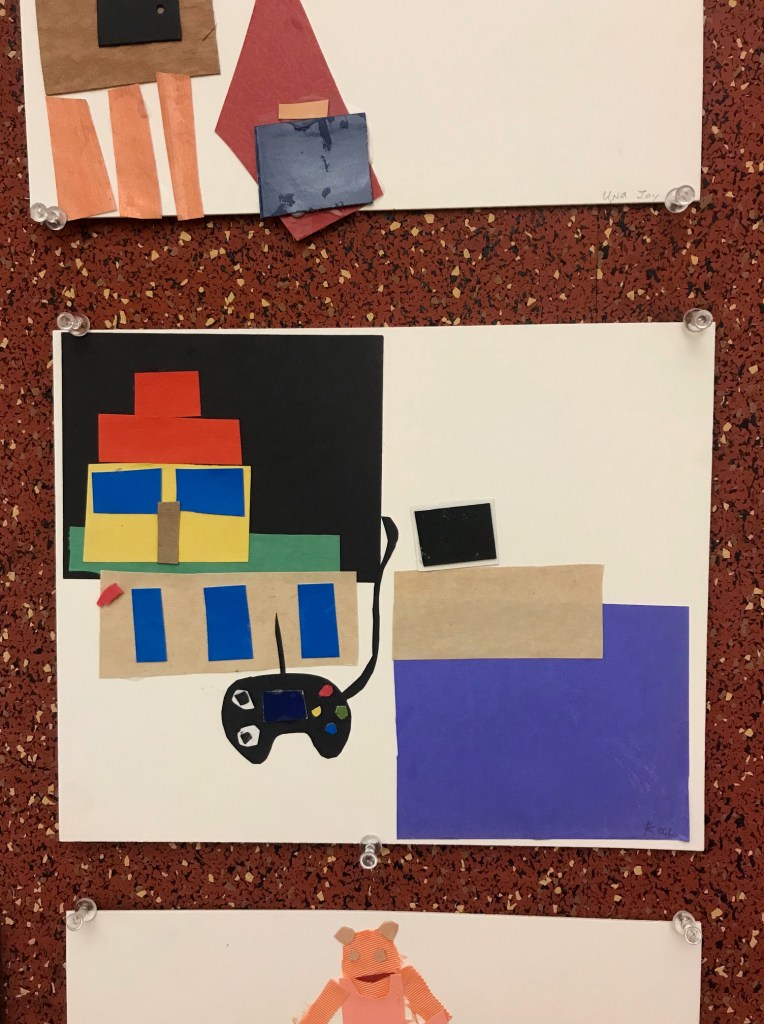
Answering, “What’s an activity you enjoy doing inside?” this 4th grader finds an elegant way to represent his favorite video game devices. 
Tearing into construction paper, this child shows an activity he enjoys: ping pong. 
Asked “How might you arrange shapes in space?” this child uses wires and extra-long twist ties to suspend a variety of colored shapes. 
Having built two curving towers, this child contemplates joining them in the middle. 
After a series of field trips where 1st graders interviewed various “community helpers” including policemen and a local fruit vendor, this student chose to represent her favorite “helper”: the school nurse. 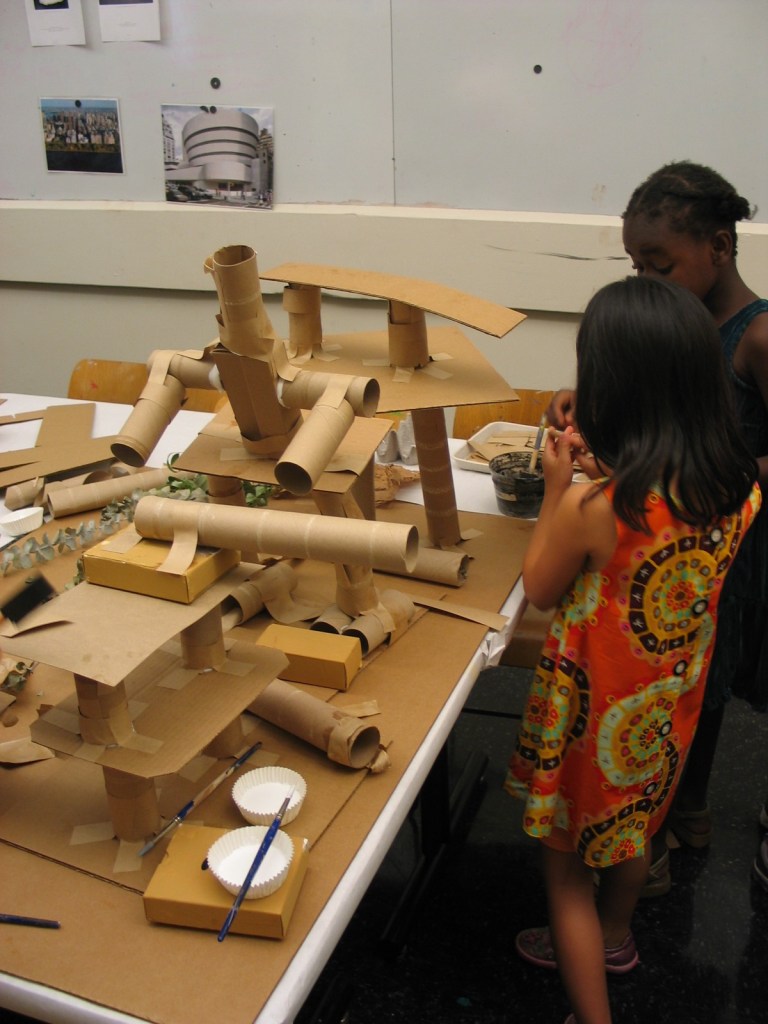
Cardboard construction requires problem solving skills as children find ways to join and support materials. It also lends itself to narrative play, as boxes become houses or play structures. 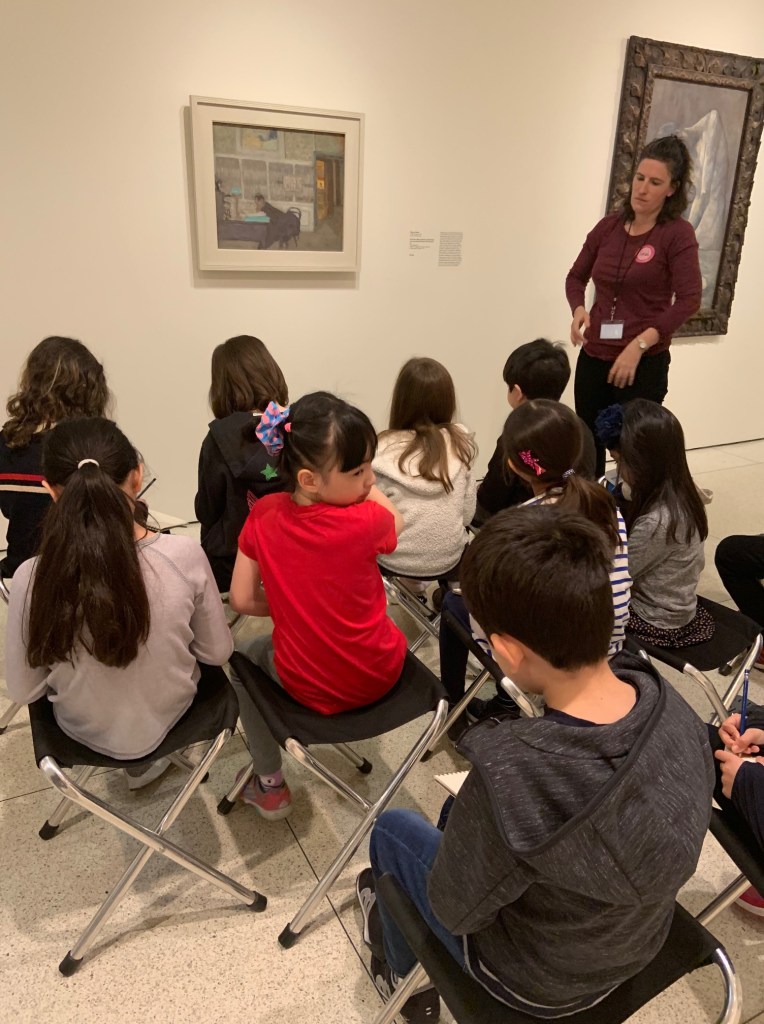
In the museum galleries, students engage directly with original works of art. 
These 1st graders explore qualities of line using a soft-tipped brush with ink. 
This 5th grader uses a soft yellow to surround the table he has painted. He includes himself in pyjamas on the right side of his paper, showing himself waking up to discover an Easter basket in the kitchen. 
Asked “When do you help others?” this 3rd grader shows himself (reluctantly) setting the table. 
At a PD for teachers, I asked, “What did you do over the long weekend?” Using brush and ink, teachers showed a variety of experiences –including attending Radio City Music Hall (bottom right.) 
Asked, “How might you use these shapes to show a person, animal or design?” this child showed a powerful-looking figure, with arms outstretched. 
This bulletin board shows a broad variety of 1st grader’s drawings. 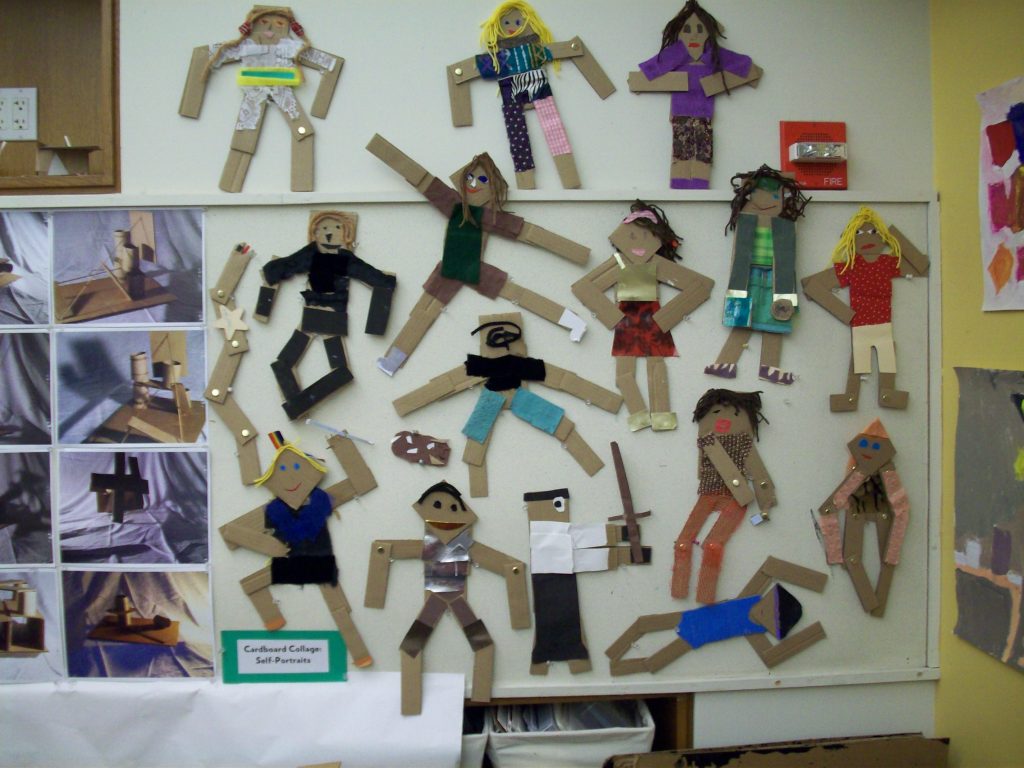
Students showed themselves in a variety of active positions, using cardboard and then fabric and yarn to show clothes and hair. One child is dancing; another represents himself as a Samurai warrior holding a sword. 
This 8-year-old uses red paint to show a time he got injured playing soccer. 
“Basic imagery” motivations invite children to represent people, animals, and vehicles –the building blocks of figuration. 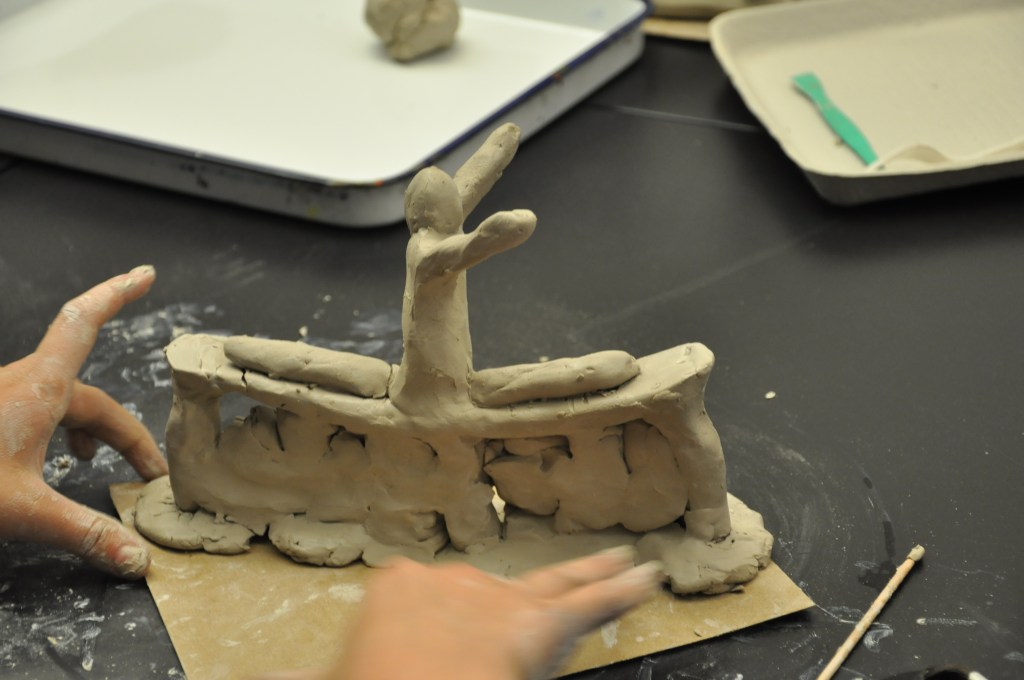
Using clay, this student shows herself doing a split in ballet class. 
In front of Kandinsky’s “Blue Mountain” 1908-9, I share Kandinsky’s theory that music can be “equivalent” to the visual arts. 
At a PD for Guggenheim staff, teachers respond to Gillian Wearing’s series “Signs that say what you want them to say not signs that say what someone else wants you to say.” 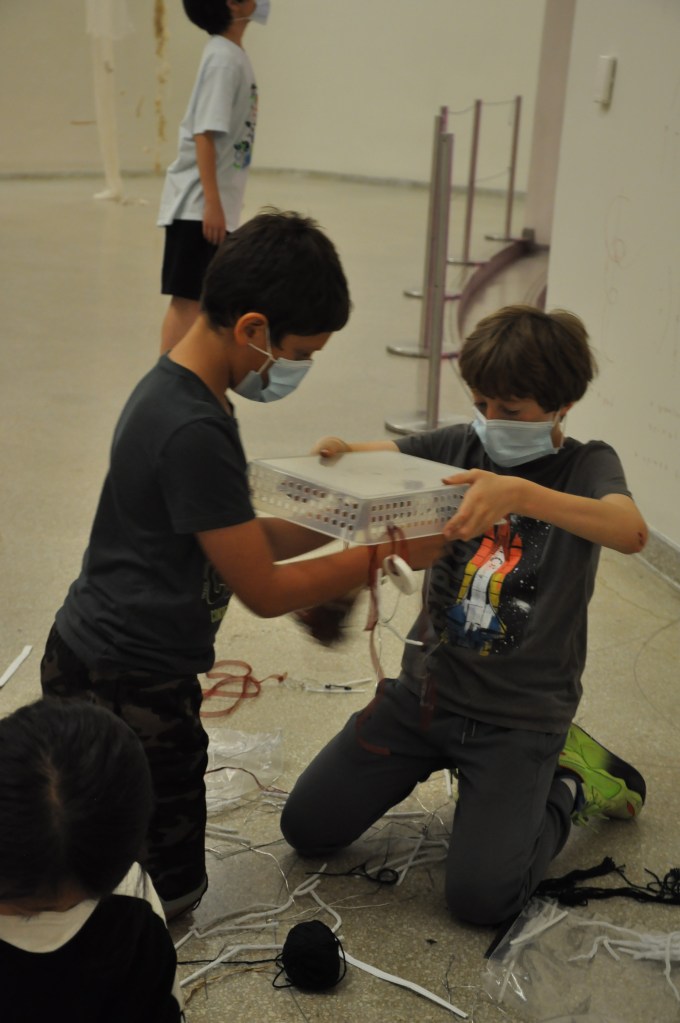
Working together, two students create a hanging sculpture in response to an installation by Cecila Vecuna. 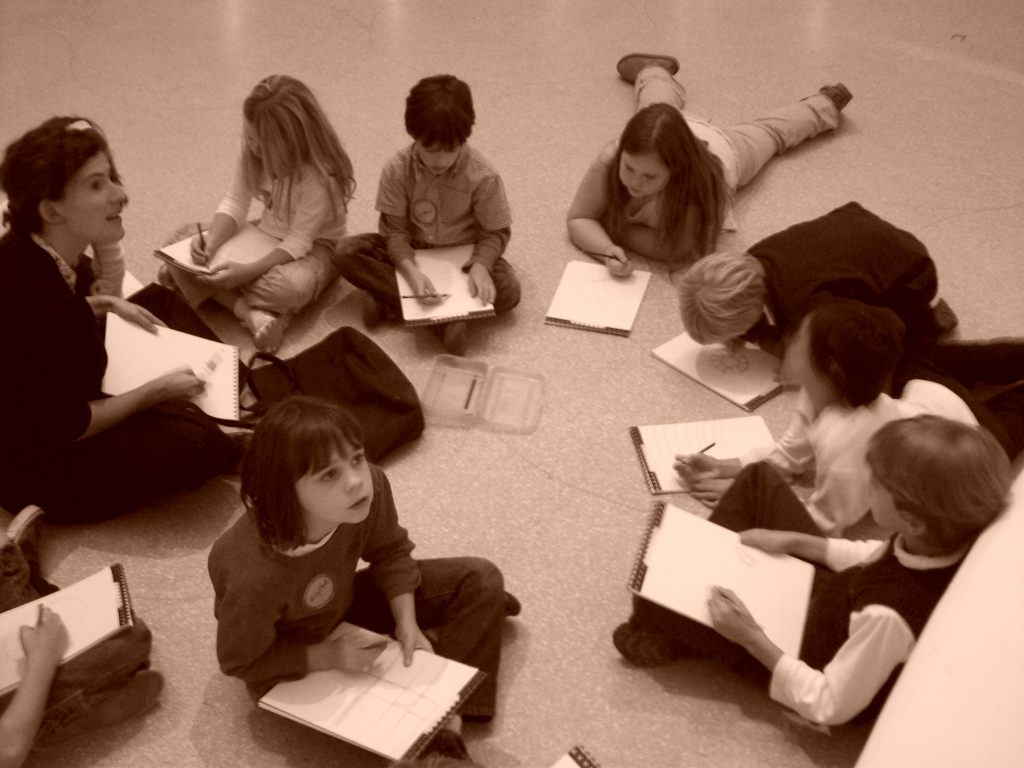
Drawing the museum’s architecture is one way to observe closely. 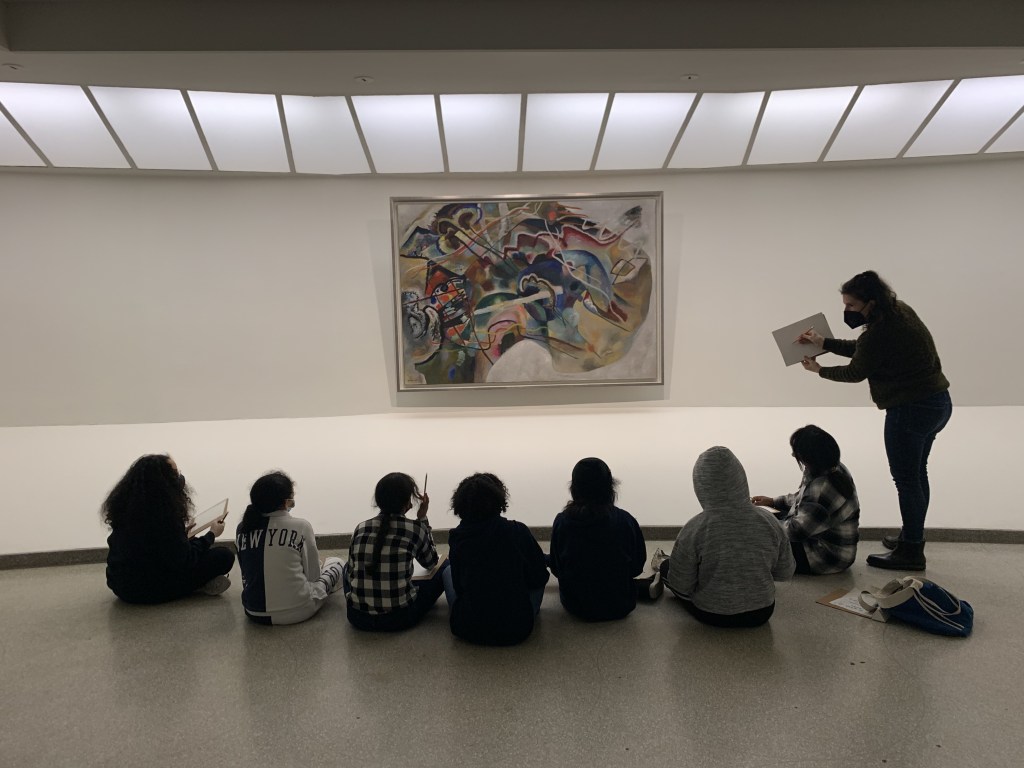
Drawing activities help students look closely. 
Tempera paint offers, thick, opaque, bright color. Children can use it to say so many things. Here, a girl is showing a pile of birthday presents waiting for her at home.
-
Subscribe
Subscribed
Already have a WordPress.com account? Log in now.
 sarahmostow.com