*
Art for children is about their lives.
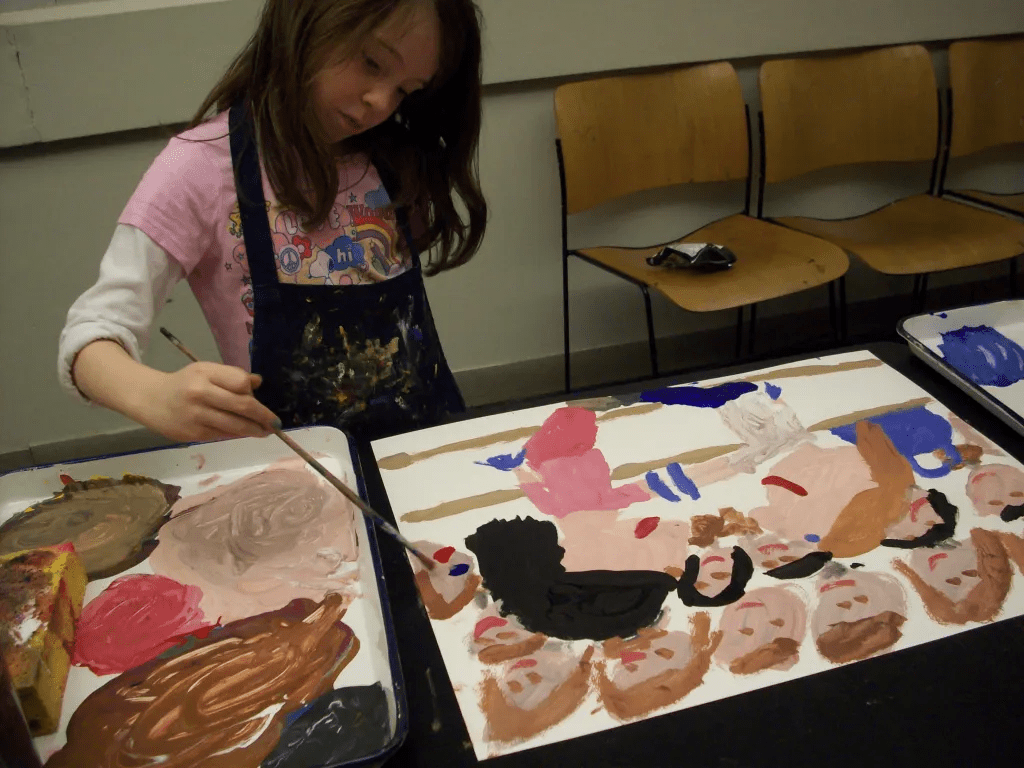
Children need lots of time exploring materials.
Basic materials can be used again and again with increasing sophistication over time.
Instead of projects, teachers can offer high-quality materials, presented clearly, and ask a question:
“How might you mix and combine colors in a painting?”
“How can you build with these cardboard shapes? What will you make?”
“How might you show a friendly or fierce animal using collage?”
“What’s something you like to do with a friend, and how might you show it in a drawing or painting?”
We set children up to learn directly from materials and then ask them about their experiences. “How do you get to school?” “What’s a time you tried something new?” “What do you like to do with a friend?”
Children also represent the wider world: “What jobs do people do?” or “What is unfair?” or “Who is an historical figure you admire and how can you show what they did to change the world?”
By inviting children to explore materials and “elements of art” through structured, in-depth experiences, we are giving them the facility they need to express their ideas and represent their world. This learning-by-doing approach can be liberating for students (who respond to open-ended questions) and teachers who can plan and sequence lessons in response to what students need next, rather than marching students towards a pre-planned goal. Art is communication. Our job as educators is to give children the tools to “speak,” then step back, and listen.
 sarahmostow.com