*
We seek to invite meaningful connections between art objects and people. This requires time and space.
Art objects have a physical presence. They belong to a particular moment in history. They were made by a human being (or several).
Visitors bring their own life experiences to the museum: memories, ideas, interests, feelings. These experiences have value.
The best museum visits are like what philosopher John Dewey called “an experience”: it flows freely and yet culminates in something whole and distinct, it engages our intellect and our emotions. It has a beginning, a middle and an end.
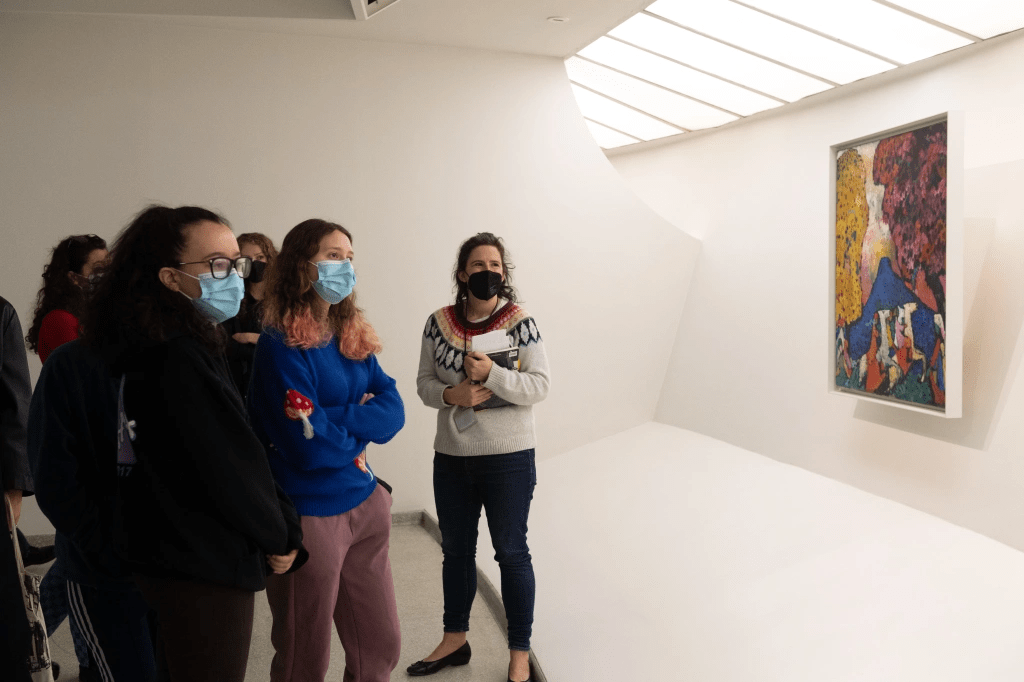
A gallery conversation starts with silent, individual looking.
As educators, we do extensive research. We share information when the moment feels right, often in response to a participant’s observation or question.
There is no such thing as too much (or too little) information –it is our job to offer the right amount and kind of information for that group and that object on that day.
We listen to what people say. We watch, and sometimes describe, body language. “I see you are leaning in…”
In an inquiry-based experience, the outcome is not pre-determined. The experience is co-created by every member of the group.
All senses are activated. Drawing, writing, or movement activities can sometimes extend the experience of looking and talking.
The selection and sequence of artwork naturally invites a conversation between artworks.
Art is a form of communication. By spending time with art as a group, we learn more about the world, other people, and ourselves.
 sarahmostow.com